We search nature for proteins that can sense.

Orbion is building Nebula to find natural proteins for quantum sensing. A protein whose emitted light changes with an applied magnetic field could help distinguish a reporter from fluorescent background.

We connect structural discovery, detailed physics and independent experiments. With Qnity, we are also developing a separate electrical readout.

Explore how Nebula works Develop a study with us

We search molecular structures for reactions worth testing.

Some proteins hold a cofactor, a small molecule that takes part in their chemistry. Its surroundings influence how electrons move and which reactions follow.

Nebula searches flavin binding enzymes and electron transfer proteins. Structural checks and inexpensive calculations narrow the search. Detailed models will test whether structure can predict a useful spin response before an independent sensing experiment.

Read the discovery rationale

A magnetic field can change how a radical pair reacts.

Light can initiate electron transfer, creating two radicals with unpaired electrons. Electron spin is a quantum property that affects which reactions this pair can undergo.

In suitable systems, a magnetic field changes the reaction balance and the emitted light. Published protein experiments establish this starting point for Nebula’s search. Abrahams et al., 2026 ↗ · Meng et al., 2026 ↗

Structural screening has run. Independent tests come next.

Our discovery engine has completed structural screening with inexpensive physical checks. We are developing models of electron transfer and spin dynamics for individual proteins.

Independent electron paramagnetic resonance measurements will test the predicted radical states. Separate optical and electrical experiments will establish whether the response repeats across preparations and improves a measurement.

Read our current progress and next tests

Magnetic modulation could distinguish a reporter from background light.

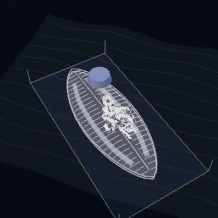
A microscope collects light from the reporter and its surroundings. Changing a reporter’s fluorescence with a magnetic field can help distinguish its signal from background, as published protein experiments show. Abrahams et al., 2026 ↗

A first study would test this possibility in a purified candidate, against an existing reporter under matched illumination, buffer and observation time.

Read the proposed comparison

An electrode could read a protein’s response to light.

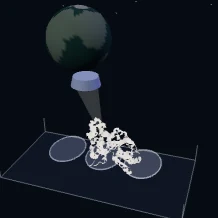
With Qnity, we will test proteins attached to an electrode during repeated periods of light and darkness. We will look for changes in capacitance, impedance or current beyond the electrode’s own response.

A repeatable electrical response would establish that the interface responds to light. Detecting magnetic or biochemical change would require a separate calibrated comparison.

Read the electrical approach and its limits

Each experimental result will change what we test next.

We will compare each result with a prediction recorded for the same protein and conditions. Disagreement will guide revisions to the model and the choice of another protein or experiment.

The next test must resolve a remaining uncertainty and address the original measurement requirement. Results that reject a candidate are part of this discovery process.

See how experiments will guide discovery

We are developing paid protein discovery studies.

We are developing studies for microscopy and bioelectronics teams. Tell us where your current method falls short, such as fluorescence obscured by background light or a molecular response you want to read electrically.

A paid study would test one measurement requirement.

Preliminary tests would establish whether a candidate merits comparison with your current method. A paid study would deliver preparation methods, predicted and measured performance, and reproducible analysis.
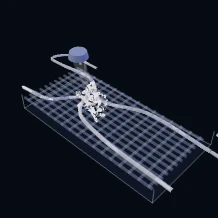
A pilot would test the protein with your equipment.

We would check whether the response remains useful with your instrument, routine samples and operating conditions.

Reliable results could support a licence.

Repeat studies and licensing could make the discovery workflow or a validated sensing application part of your product development.

Discuss a first study

Protein sensors could help us follow living systems as they change.

Five application hypotheses guide our longer term research. Each depends on a protein response that can be measured reliably in the intended setting.

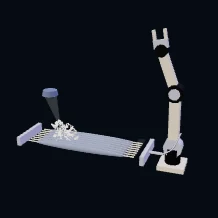
Monitor the muscle in a biohybrid robot.

A molecular signal could link the muscle’s condition to its mechanical output.

Studies and proposed tests

Nebula is built by Orbion.

Orbion develops computational tools for protein expression, stability and developability. With Nebula, we are extending that work into the discovery of natural protein quantum sensors.

Explore Orbion

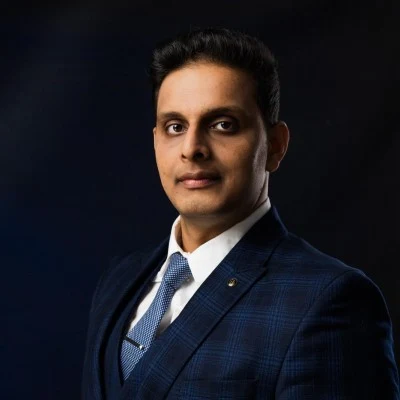
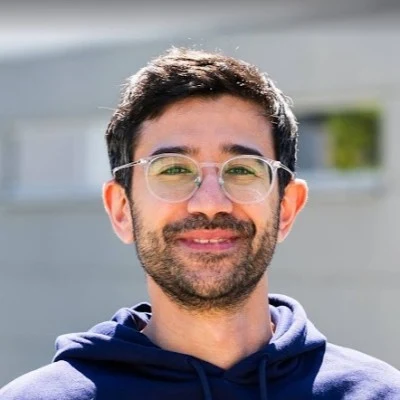
Aniruddh Goteti

Cofounder

Aniruddh connects machine learning and innovation leadership with Nebula’s scientific and commercial collaborations.

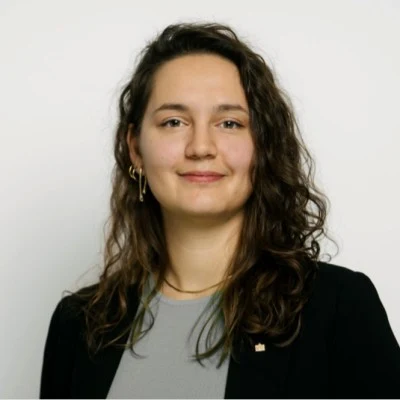
Çağlar Bozkurt

Cofounder

Çağlar connects marketing, growth and operations with the programme’s market needs and adoption.

Dr Evangelia Nathanail

Science Lead

Evangelia co-deposited an experimental structure of human MIC60. She brings protein production and structural biology to checking that Nebula’s models and samples describe the same system.

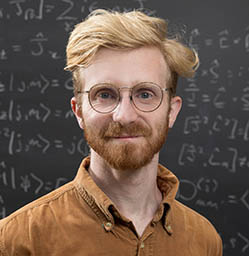
Dr Promit Ray

Radical Pair Physics Lead

Promit has published research combining quantum chemistry and molecular simulation. He leads development of Nebula’s radical pair predictions.

Dr Dennis Kwiatkowski

Business Adviser and Fractional Commercial Lead

Dennis coauthored structural studies of light-sensitive proteins. He works with prospective users to define useful measurements and a route to adoption.

Our scientific advisors connect theory with experiment.

The core team develops Nebula. Our advisors scrutinise its physical models and experimental interpretation; collaborators provide production, measurement and analysis capabilities.

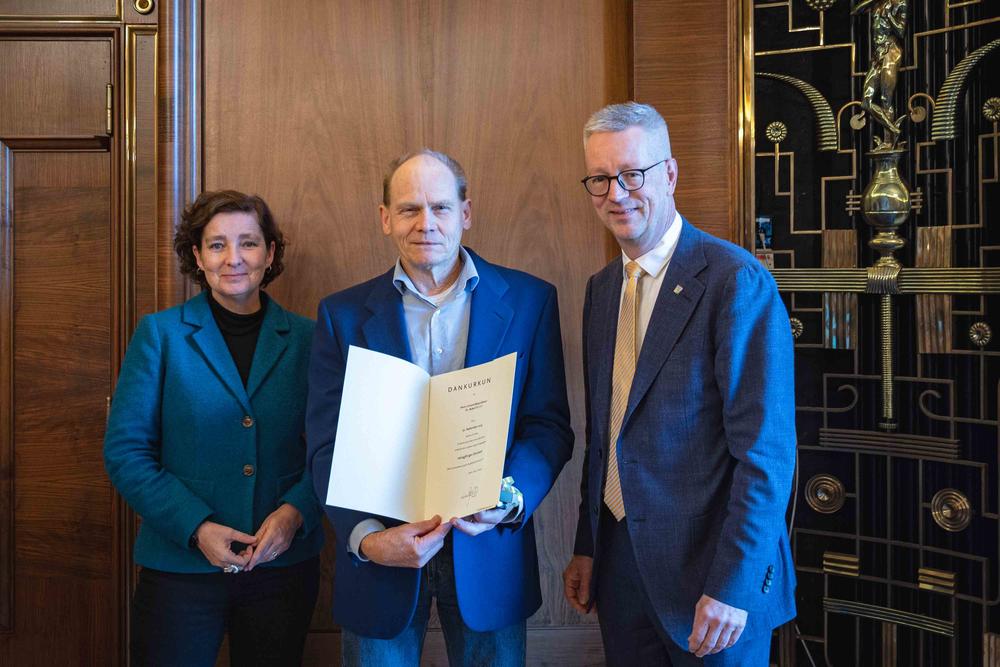
Professor Robert Bittl

Professor Robert Bittl

Scientific Advisor · Freie Universität Berlin

Robert has used electron paramagnetic resonance to study coupled radical pairs. He advises on the radical-state measurements that will test Nebula’s predictions.

University profile
Professor Thomas P. Fay

Professor Thomas P. Fay

Scientific Advisor · UCLA

Thomas has developed electron-transfer and radical pair spin-dynamics methods. He advises on connecting molecular structure with physical predictions.

University profile
Professor Justin R. Caram

Professor Justin R. Caram

Scientific Advisor · UCLA

Justin develops optical spectroscopy and coauthored research on molecular quantum sensing. He advises on how protein responses could be measured.

University profile
Dr Laís Lopes

Dr Laís Lopes

Scientific Advisor · Qnity

Laís is first author of research on electrochemical measurement of graphene’s electronic structure. She advises on Nebula’s molecular electrode interfaces.

Qnity profile

Our collaborations connect protein production, measurements and analysis.

Discuss the measurement your team needs to make.

Meet Aniruddh for 30 minutes to define the comparison a first study should make.

Bring a description of your sample, instrument and the limitation you want to overcome.

Choose a meeting time

Google Meet · Times shown in your time zone

Choose a meeting time.

Nebula · 30 minutes with Aniruddh

View available times in a separate tab ↗